Prepare for IELTS and TOEFL Speaking with challenging practice conditions. Learn how to handle background noise, unclear audio, time limits, and unexpected distractions while improving your speaking confidence.
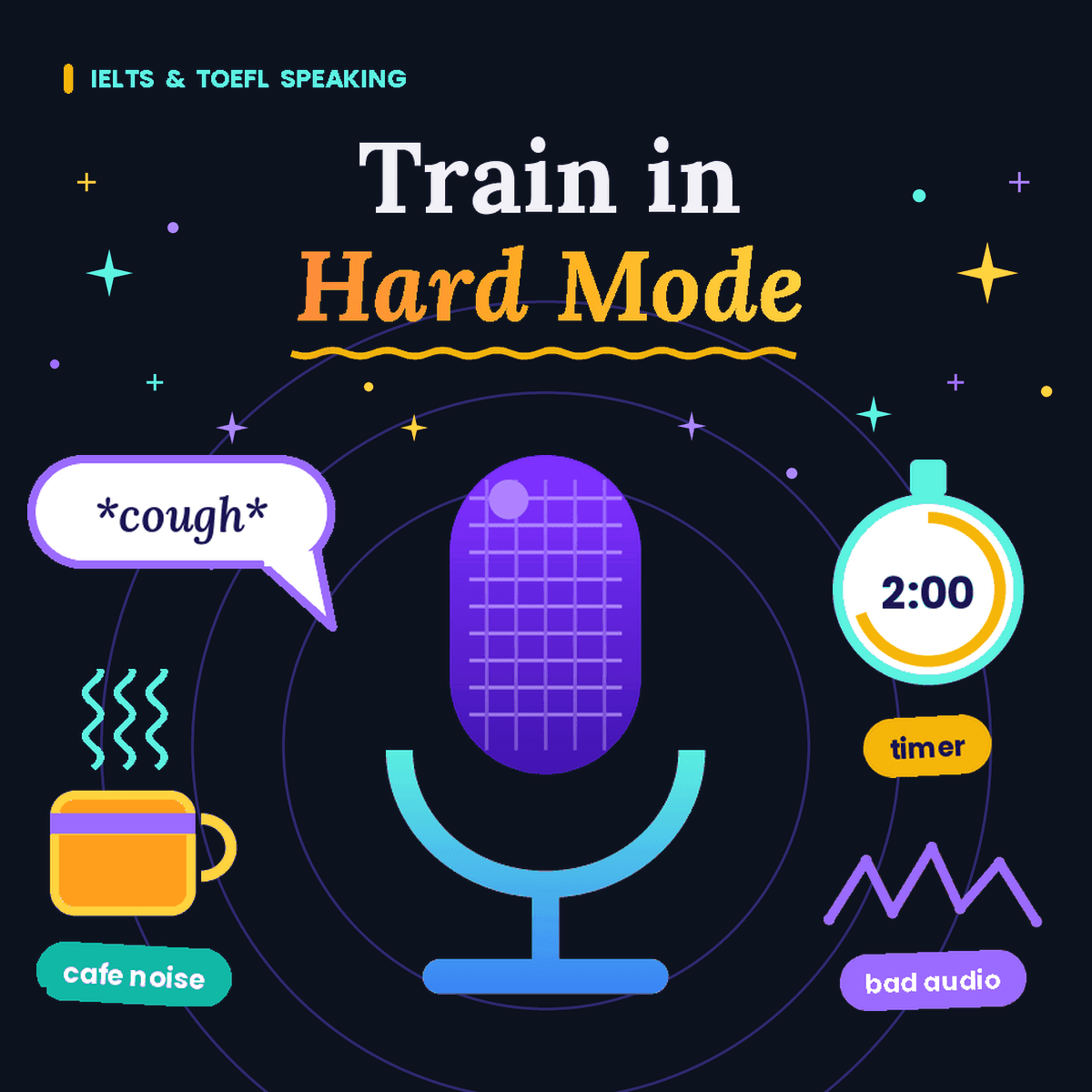
Most students practise speaking in a quiet room, with a good microphone and plenty of time. Then they walk into the exam, hear a stranger cough, see a ticking clock and suddenly forget everything they know. The problem is not their English. It is that practice never looked like the real thing.
Pilots solve this problem with flight simulators, where the engine fails on purpose. You can borrow the same idea. Practise in conditions that are harder than the real exam, so that exam day feels easy.
If you can speak clearly with noise, a bad microphone and a countdown, a quiet exam room is a relief. It is the same reason athletes train with heavier weights than they compete with. Hard mode builds three skills: staying calm under pressure, finishing your sentences even when distracted, and recovering quickly after a mistake.
1. The noise drill Play a cafe or street playlist at moderate volume and record a two-minute answer to a random question. Your goal is to keep a steady pace and finish every sentence.
2. The bad microphone drill Record on an old phone or cheap earphones. Then listen back. Can you understand every key word? If not, slow down and pronounce the ends of words more clearly. This also helps in computer-based tests, where audio quality can vary.
3. The surprise topic drill Ask a friend to give you a random topic, or use a random word generator. Give yourself only 15 seconds to prepare, then speak for one to two minutes. This trains you to organise ideas quickly, a skill that both IELTS and TOEFL reward.
4. The standing drill Stand up or walk around while you answer. Nervousness lives in the body, and this drill teaches you to keep your breathing steady and your voice calm even when your body feels tense.
5. The wall drill Speak to an empty room for two minutes with no feedback, no nodding and no smiling. Many students rely on listener reactions without realising it. In an exam, the examiner or microphone may give you nothing back. Practise speaking confidently into silence.
Do not just record and delete. Spend five minutes reviewing. Ask yourself three questions: Did I finish my sentences? Did I use filler words when I felt pressure? Did my pace change when the noise started? Write one small goal for the next session, such as 'pause instead of saying um'.
Making it too hard too soon. Start with a gentle level, like quiet background music, and slowly increase the difficulty.
Practising only hard mode. You still need to learn the format of your test, its question types and its scoring criteria. Keep using official sample material and timed practice tests.
Ignoring your recordings. The improvement comes from listening back, not from the recording alone.
Confidence on exam day is built long before the exam. When you have already spoken through noise, bad audio and surprise topics, the real test is just another practice round. Train harder than you need to, and the actual day will feel calm.
See how Pace can help you prepare for exam day. Pace runs mock speaking tests under real conditions and gives you detailed feedback. Message us for a free 15-minute consult.
Book a free 25-minute trial session with our expert teachers and experience personalized English learning.

